Stanley Lewis was my Art teacher in 1968. For one assignment, he asked us to choose a postcard to copy. I chose a work by Cezanne, a landscape; I just liked the view and the pine tree branch and how it reminded me of Vermont. I was thirteen years old.
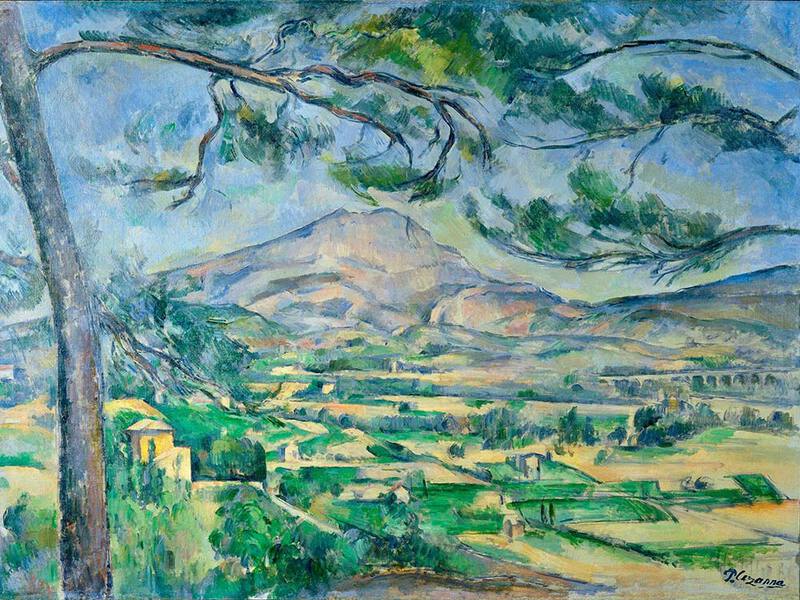
Paul Cézanne, Mont Sainte-Victoire with Large Pine, c.1887
I later met Stanley Lewis when I was a graduate student at Yale, 1979-1981. He came to give critiques. We talked awhile and he hadn’t remembered me until I smiled and laughed.
Rackstraw, I first heard talk at RISD in 1975, when he came to show slides of his landscapes, Maine, and the river passing, the journey of a barge. Years later, I took Rackstraw’s landscape seminar (also at Yale). He was a brilliant speaker and tough critic. He liked my work, my observational work, and was more critical of my narrative paintings. But he also repeatedly noted that historically, the best paintings of landscapes tended to be by artists who were not exclusively landscape painters. He does not consider himself to be a landscape painter (in the conventional sense) as he notes in the video linked later in this blog. A favorite memory is of Rackstraw talking about Canaletto and how he juxtaposes a head with an architectural element that then creates a narrative suggestion.
Rackstraw’s work indirectly inspired my thirteen-foot-long painting done in graduate school. I was mostly looking at Brueghel and Hokusai. Foremost, I was responding to a place and a situation I’d seen walking from New Haven to Fair Haven. When Rackstraw saw this painting, he admired it and said it was a subject he’d like to paint.
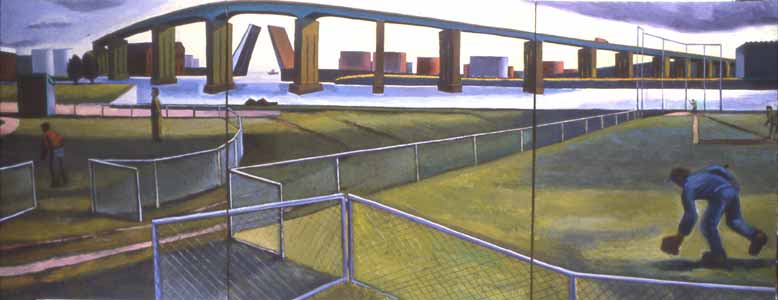
Ball Players Triptych oil on canvas 60 X 156″ 1981
What I remember about Stanley, as a teacher in the late sixties, was his enthusiasm and how he had us work with the Ebony pencils, beautiful rich grays. Once, in a ramble, he mentioned, back then, that he had a tendency to overwork his artwork. His warmth, smile, and sense of caring remain constant through the decades.
The comment about overworking makes me think of this painting from his show in June of 2022 at Betty Cunningham Gallery in NYC, a very large and deep painting that is a whole experience to see in real life.
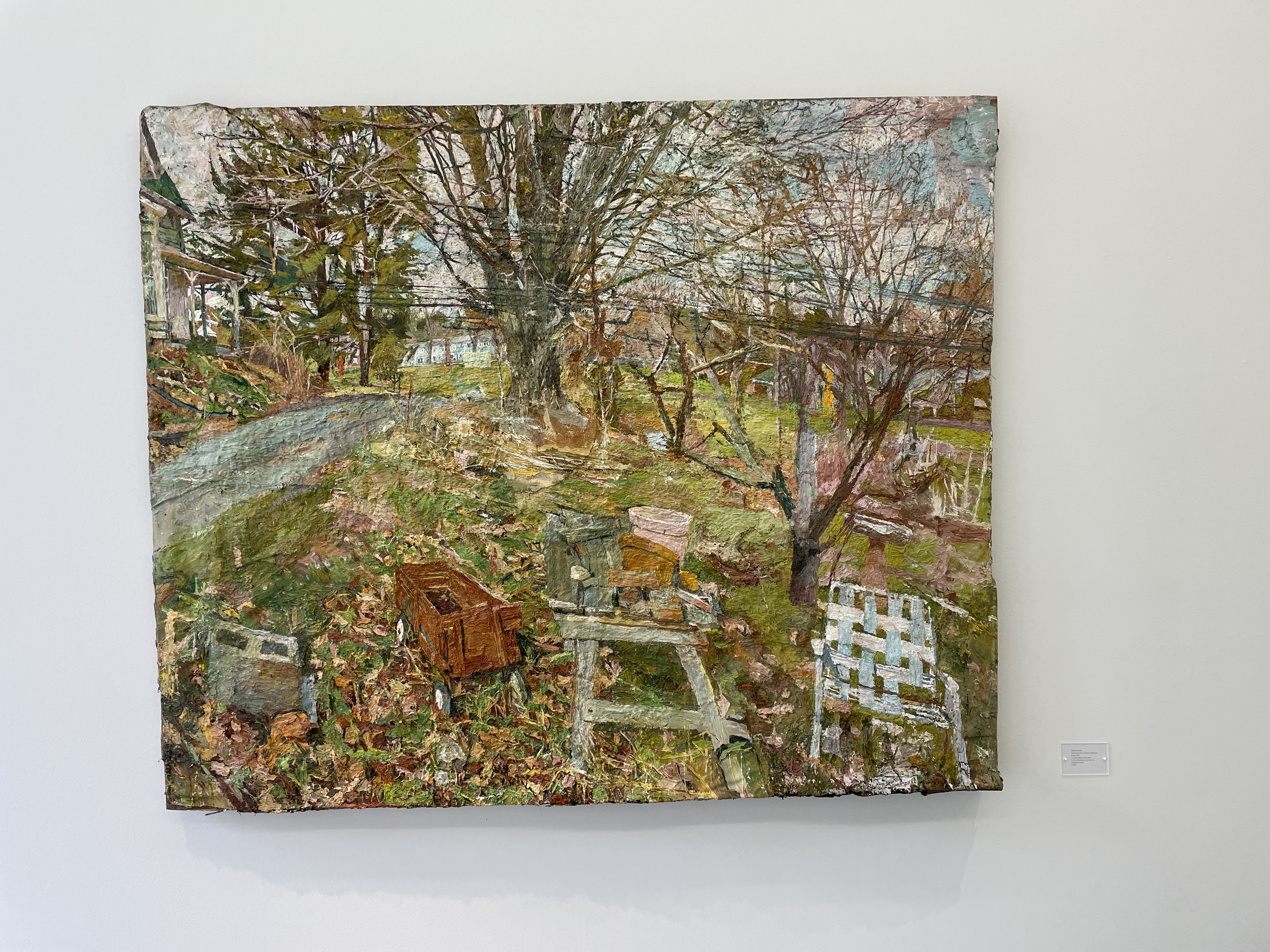
It’s got an absolutely gorgeous surface, born of relentless re-workings, of trying to get it right. Stanley talks a lot about that effort to get it right. In addition to his rigorous perception, the construction of the work is exceptional: quirky and ever-engaging: We are led along the bottom edge, swung left over the cement block and we careen down the driveway to the grand uplift of the old maple tree. The house and the apple sappling at right act as posts to ricochet us back into the rectangle of the canvas: they bracket our experience and keep us steady as we return to the foreground. They form the periphery of an implied circle within the rectangle of the canvas. That’s the faraway experience.
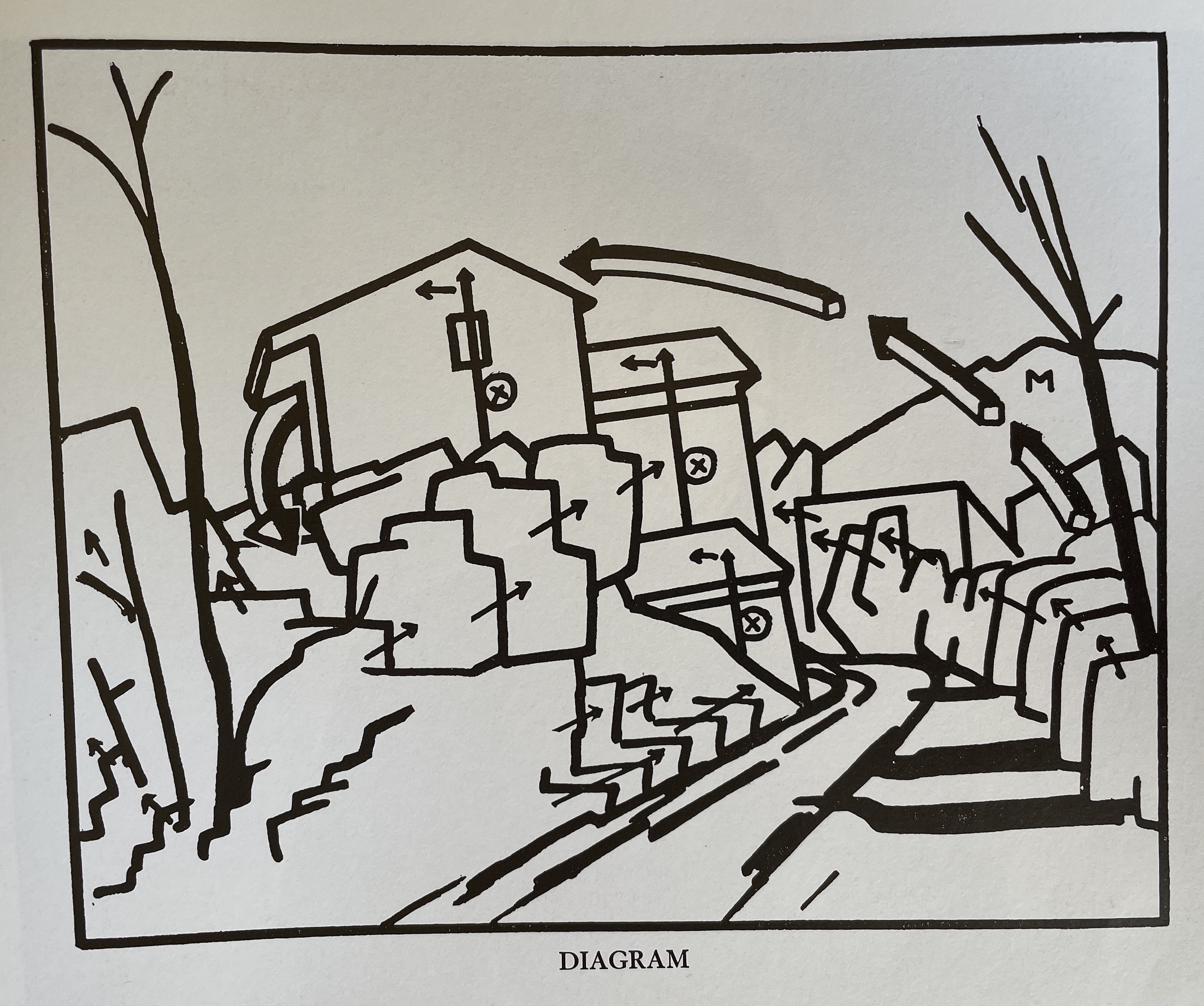
It brings to mind Erle Loran’s analysis of the Maison Maria in the Forest of the Chateau Noir from Cezanne’s Compositions. When Stanley visited my studio in the Rudolf A&A building, I had lying on the floor Kenneth Clark’s Landscape into Art opened to a Brueghel painting. Stanley excitedly pointed out to me how the diagonal in the foreground gives you the choice to either travel up the incline or down, thus making a dynamic entry into the space of the painting.
Up close, Stanley’s gnarly paint becomes a whole other kind of landscape. Sienna, Ochre, and Paynes gray (or similar earth colors) slide in wet strokes that have piled up over time, day after day, stroke after stroke, as Stanley caresses and cuts, applies and re-applies again to the topography.
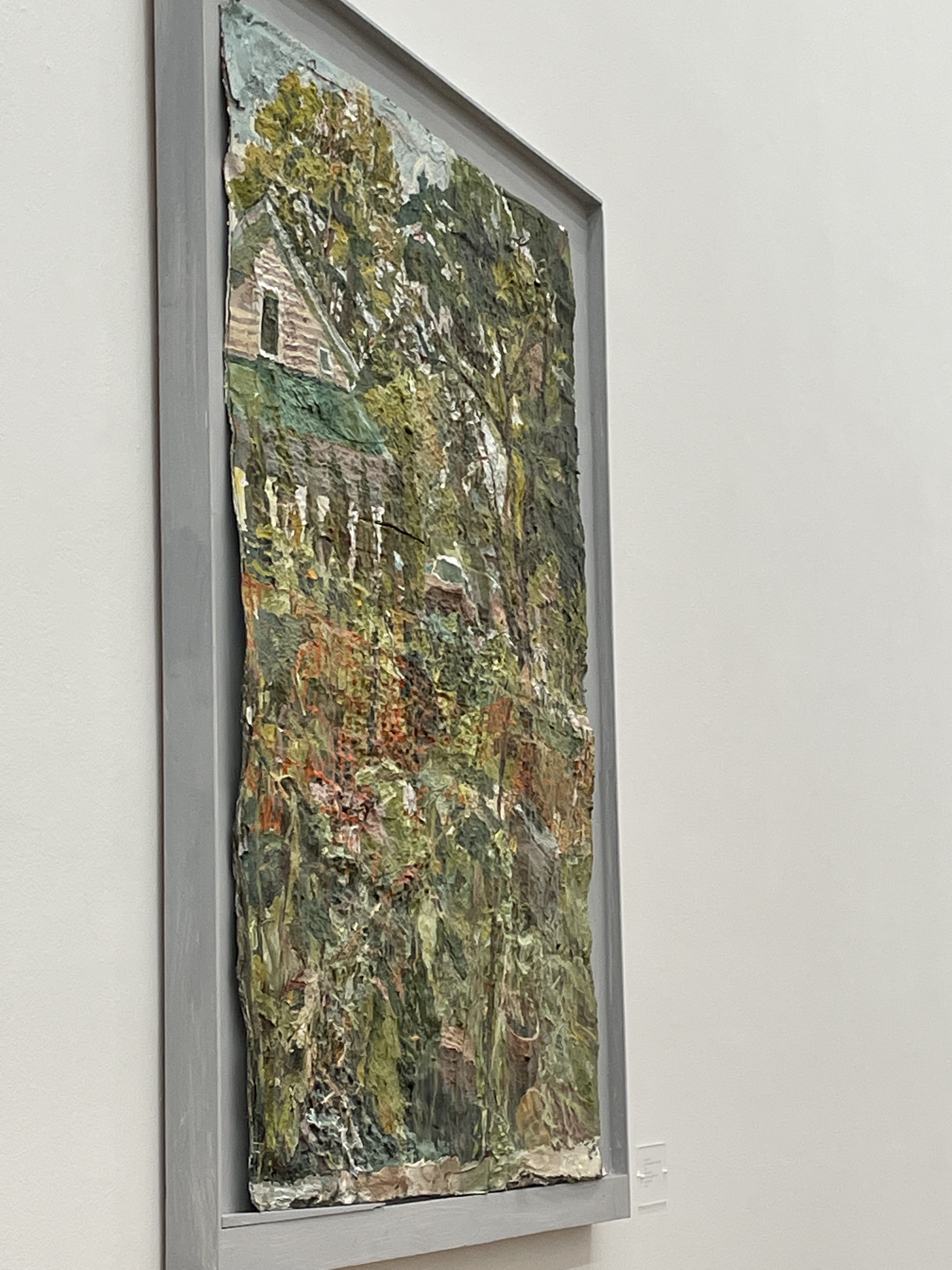
A side view of his painting reveals the weathered relic of labor, the addition of horizontal layers, strips of more canvas to enable the composition. Stanley takes us on his creative journey and we feel the long trek, the seeing, and the re-seeing, the putting it down, and the revision, the ongoing effort.
Rackstraw is, of course, a long distant runner from way back…and he is fierce in his dedication as well, but in a different way. Rackstraw’s search happens mostly in the preliminary drawing. He weighs his marks inside the measure of the horizontal and vertical grid (whether actually present or sensed as he draws). I believe any actual grids come later as he transfers his drawing to the canvas. Much does happen in the drawing where he lays out the composition, often revising it, expanding on it by adding more paper. (Both Lewis and Downes are in a long tradition, seen in Degas for example, of artists who add more to the composition at top, bottom, left, or right, as needed).
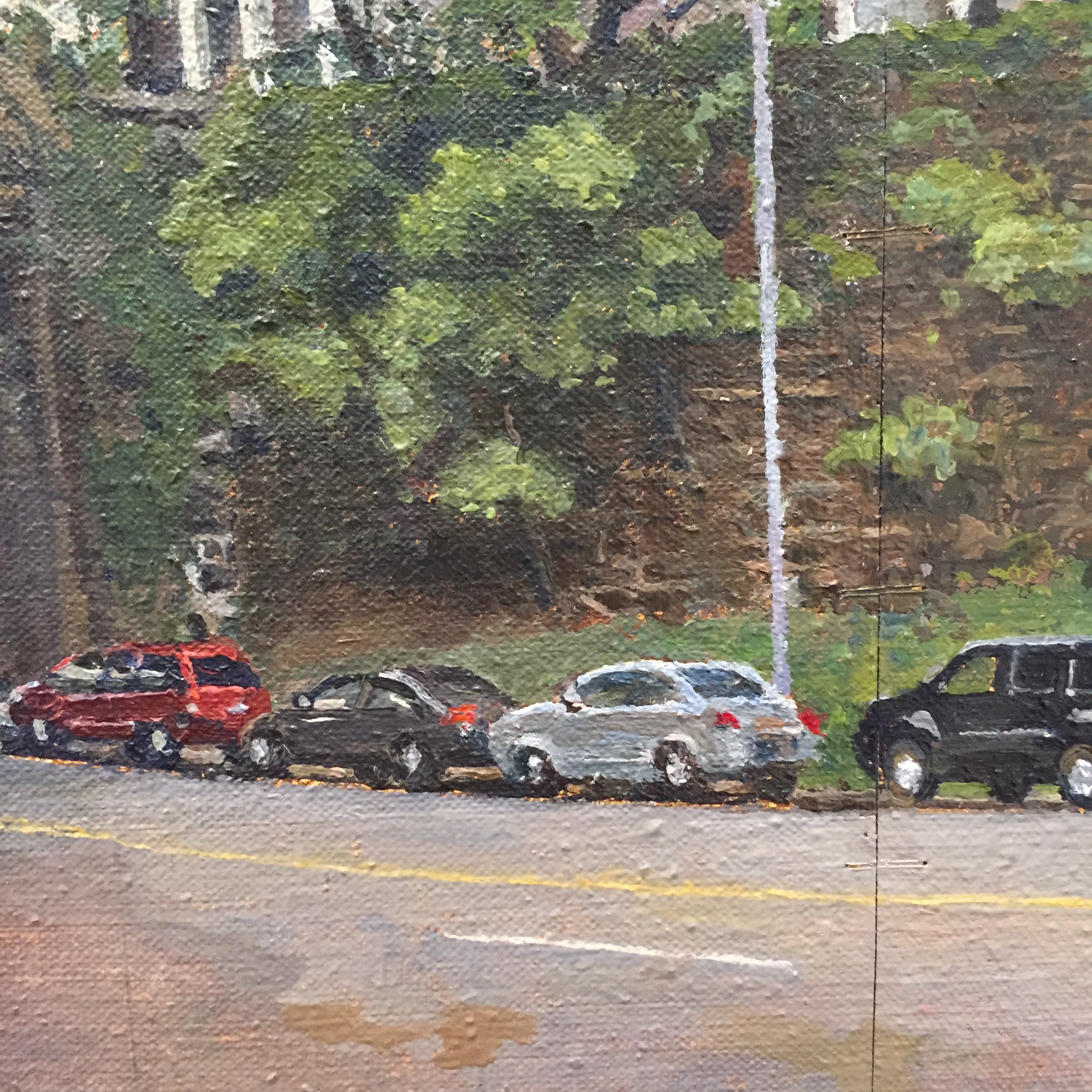
Detail of a Downes painting.
Sometimes you can see in the painting the addition, the seam of the add-on. But usually Rackstraw has worked this out in the pencil drawing. By the time he gets to the painting, he seems to know his composition.
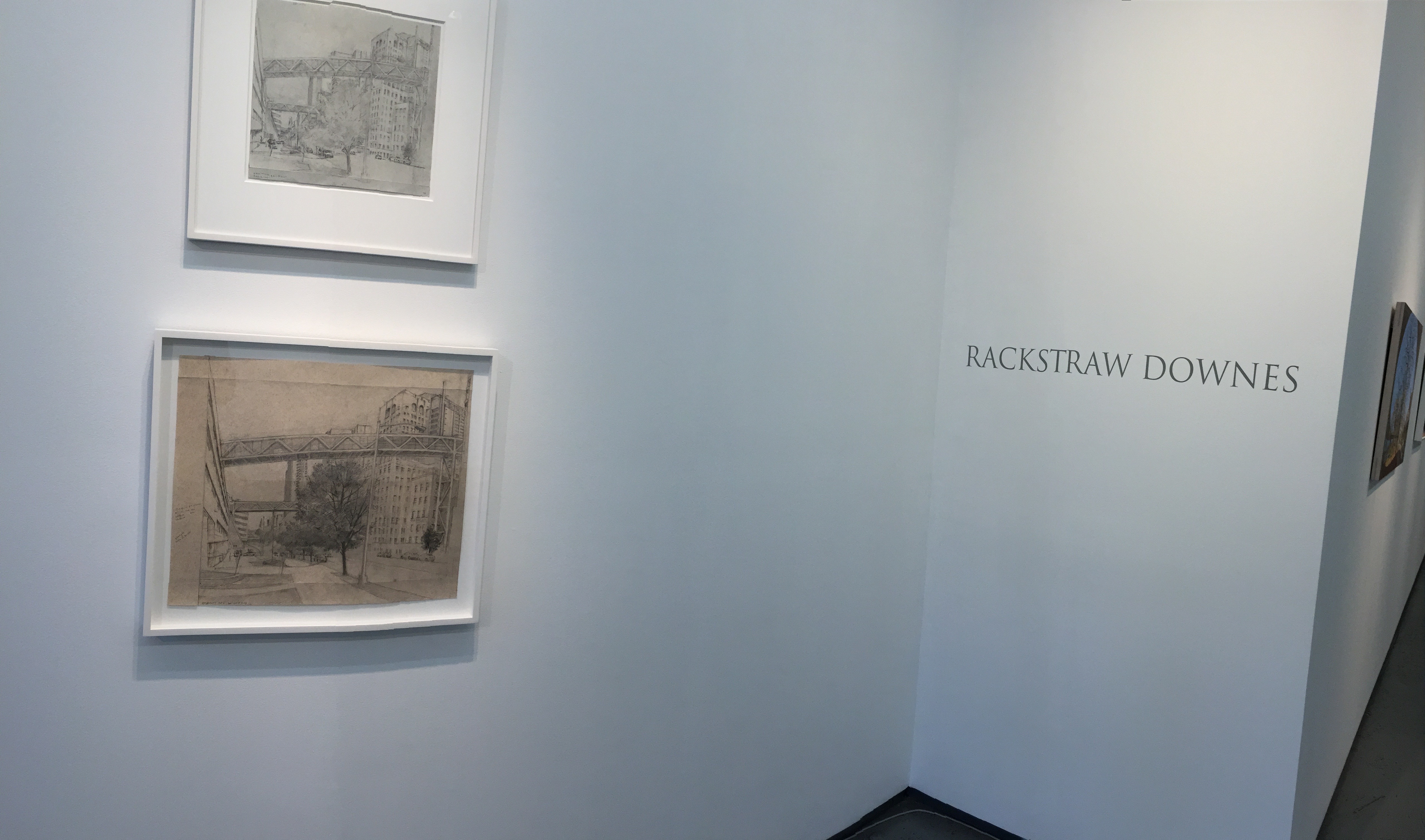
Rackstraw’s drawings
The paintings do have a worked surface, more so than his early work. He chooses a rougher surface and he daubs and finesses his sure coloration over the weave with deft accuracy and delicate sensitivity.
Stanley’s textural orchestration expresses his own personality, each authentic to their own beings.
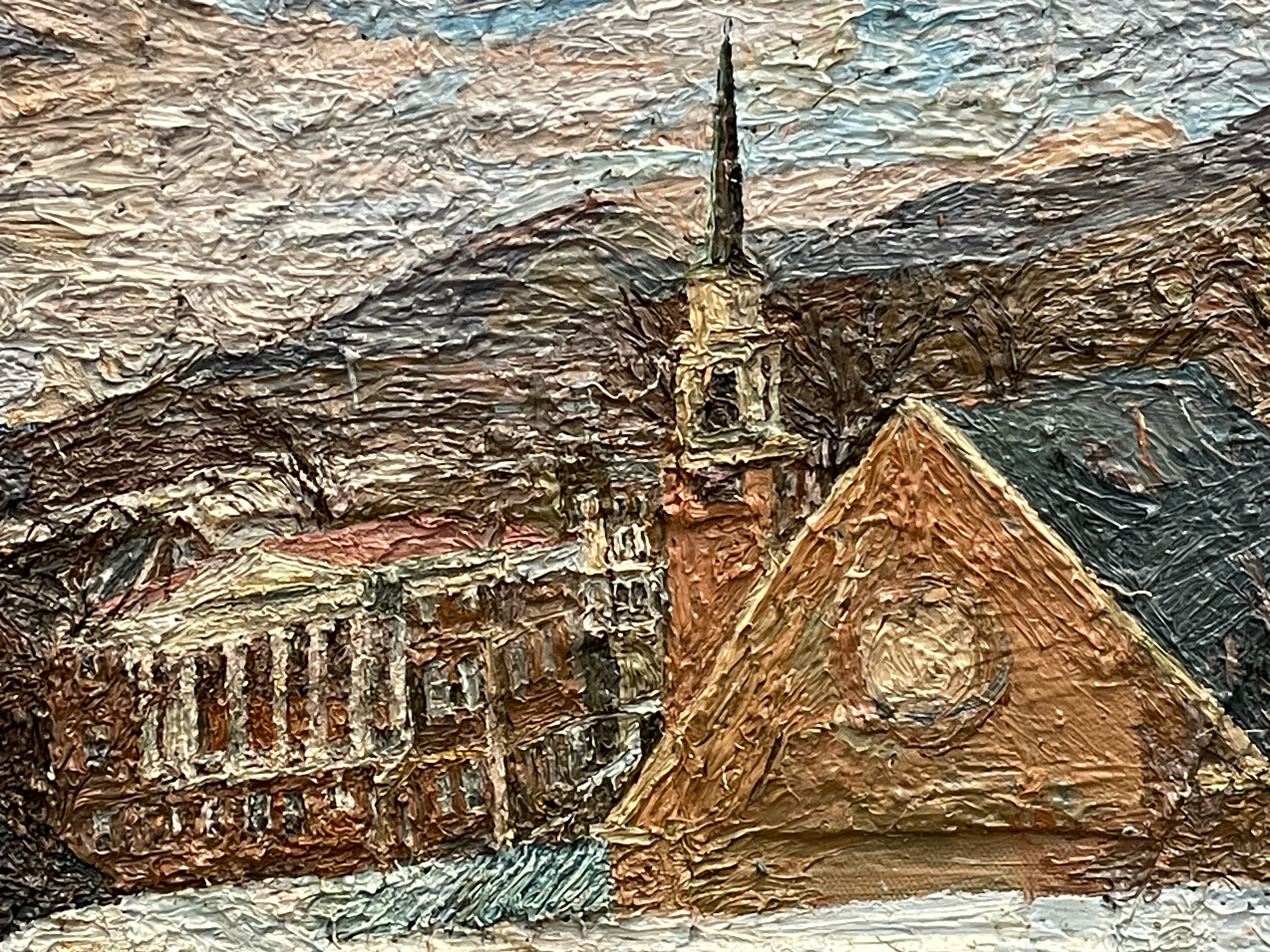
Detail of a Stanley Lewis painting

Detail of a painting by Rackstraw Downes
These two details of paintings from On Site, Major Paintings by Rackstraw Downes and Stanley Lewis at Betty Cunningham, as seen on July 28, 2023, perhaps hint at the quality of surface and scale that can only be experienced when being in the presence of these remarkable works.
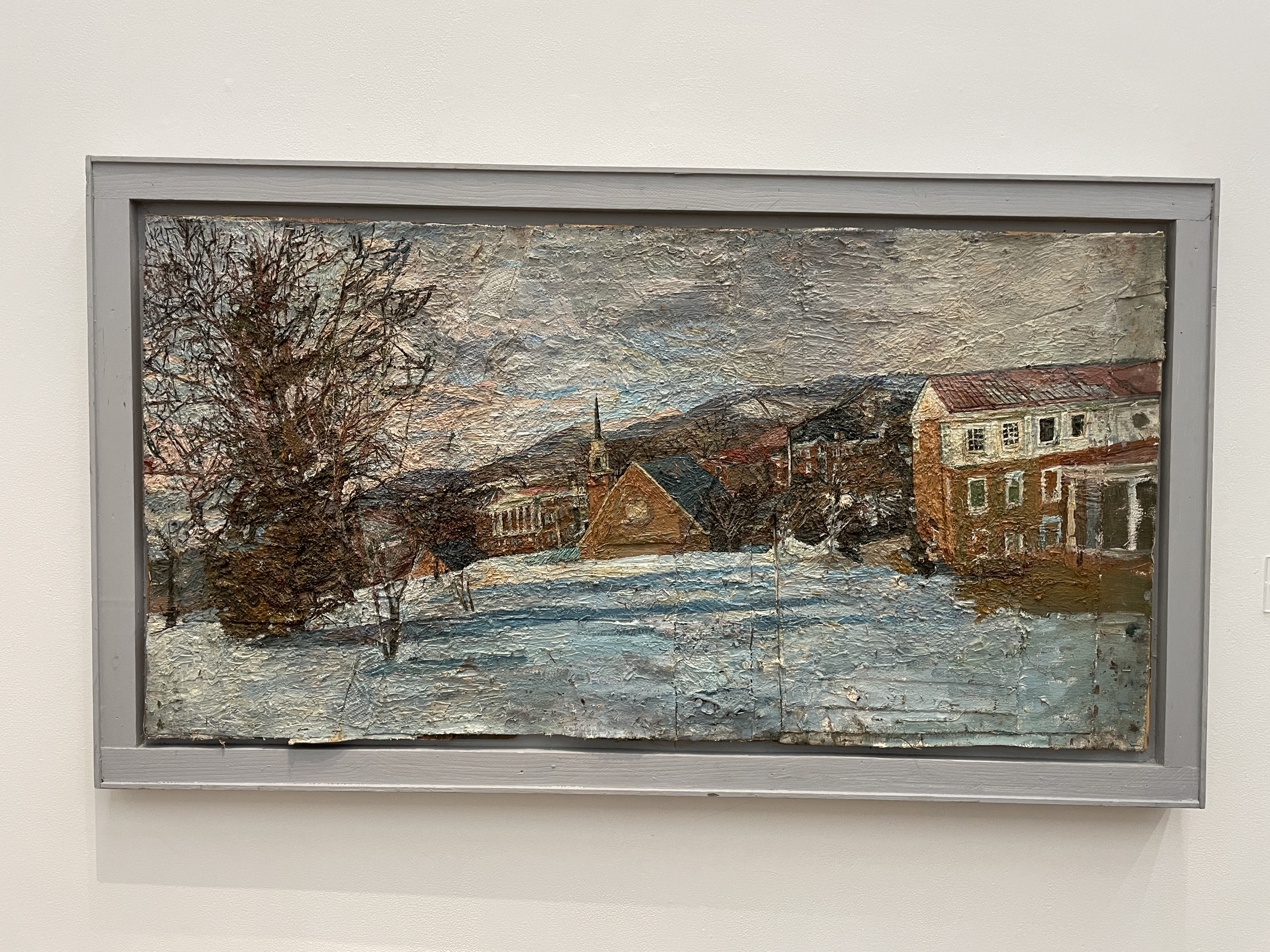
Stanley Lewis
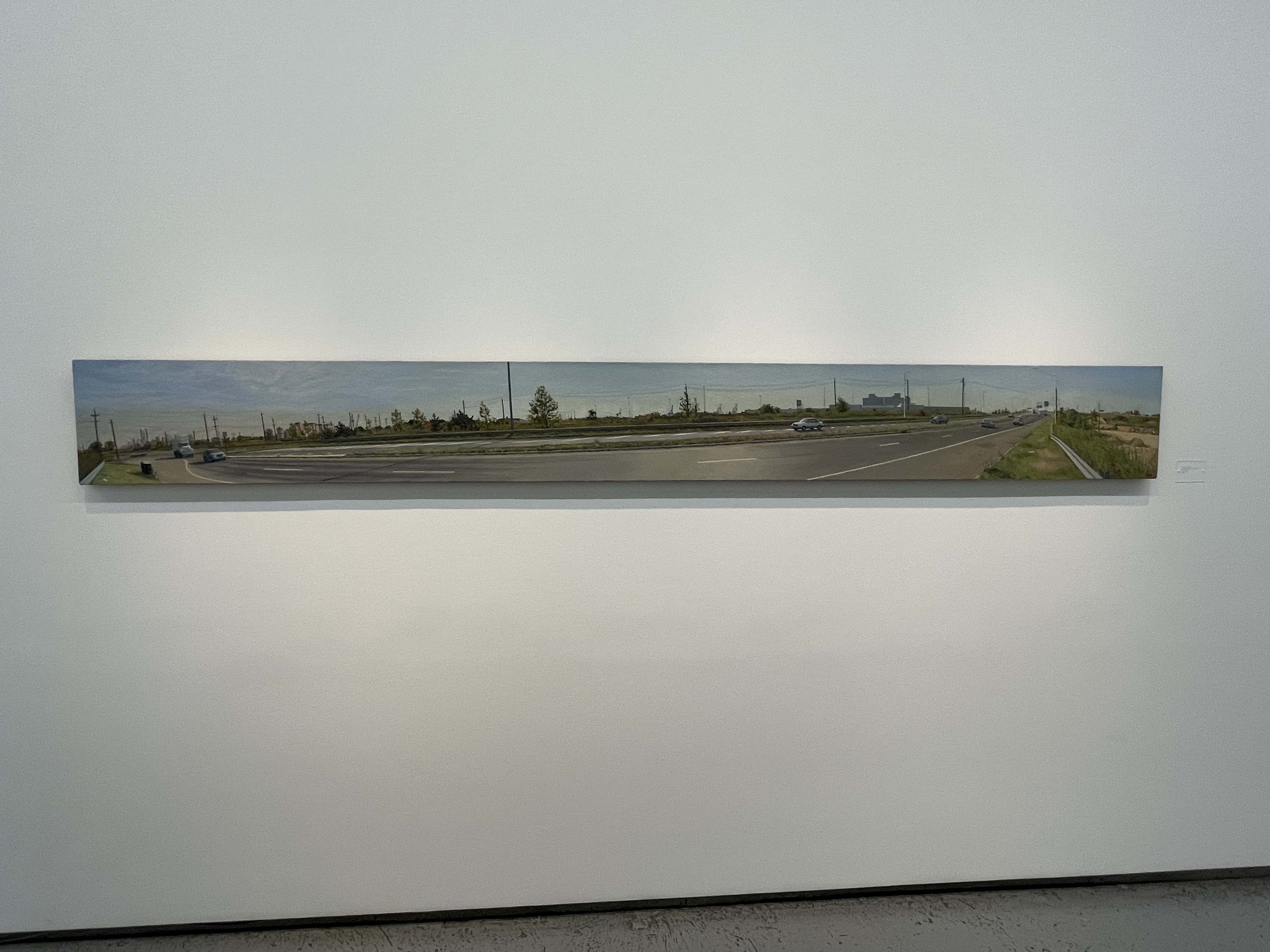
Rackstraw Downes
Before coming to know the artwork of Stanley and Rackstraw, I first saw the street as a compelling subject in the work of Giacometti.
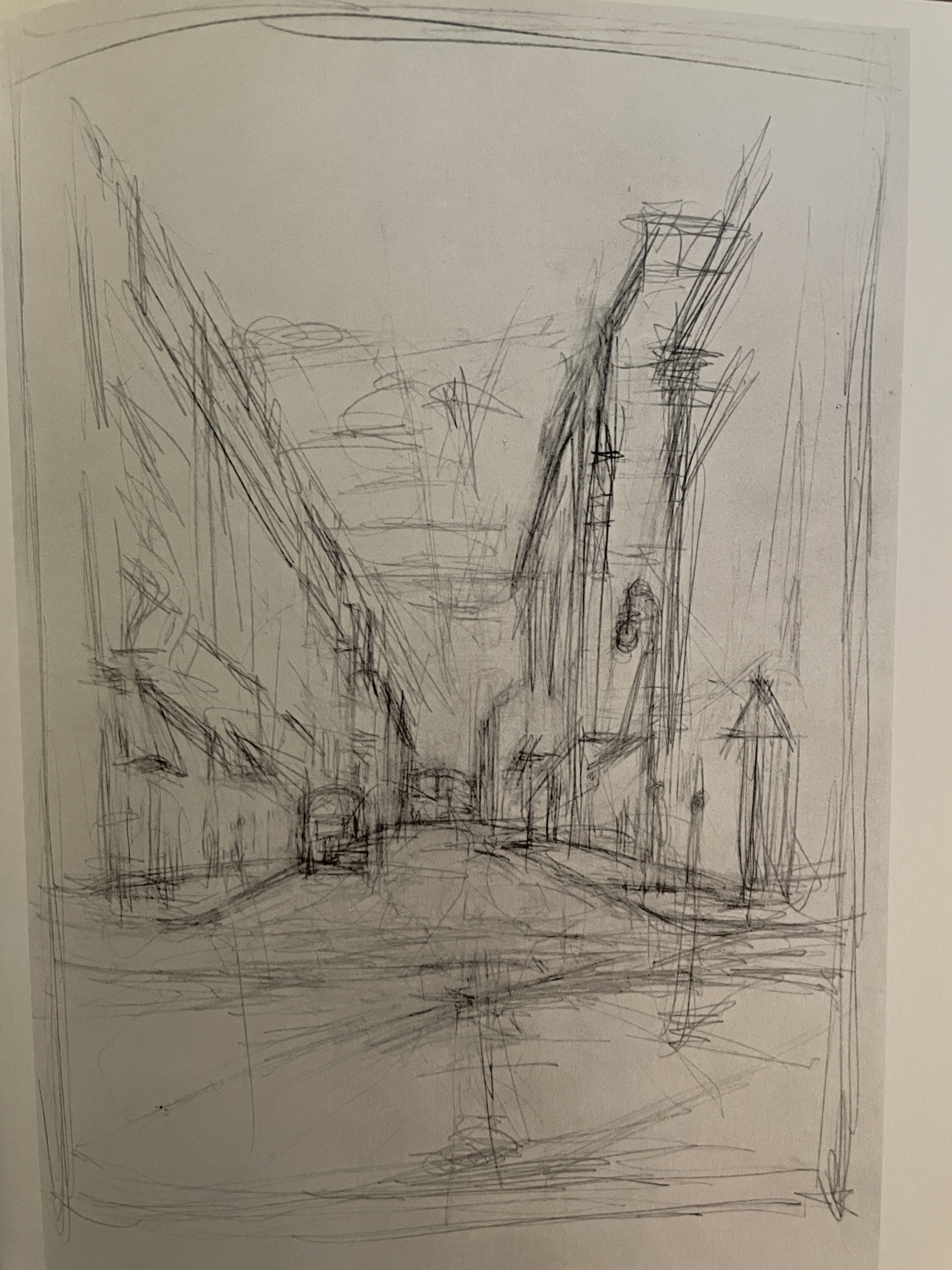
Giacometti A Street in Paris pencil on cream paper about 19 X 12″ 1952
And I was also very taken by the work of Ralph Fasanella.

Ralph Fasanella New York City oil on canvas 50 X 110″ 1957
And I have always admired the charm and humility of the street scenes by Utrillo.

Maurice Utrillo La Rue des Abbesses Oil on board 30 3/8 x 41 1/4″ 1910
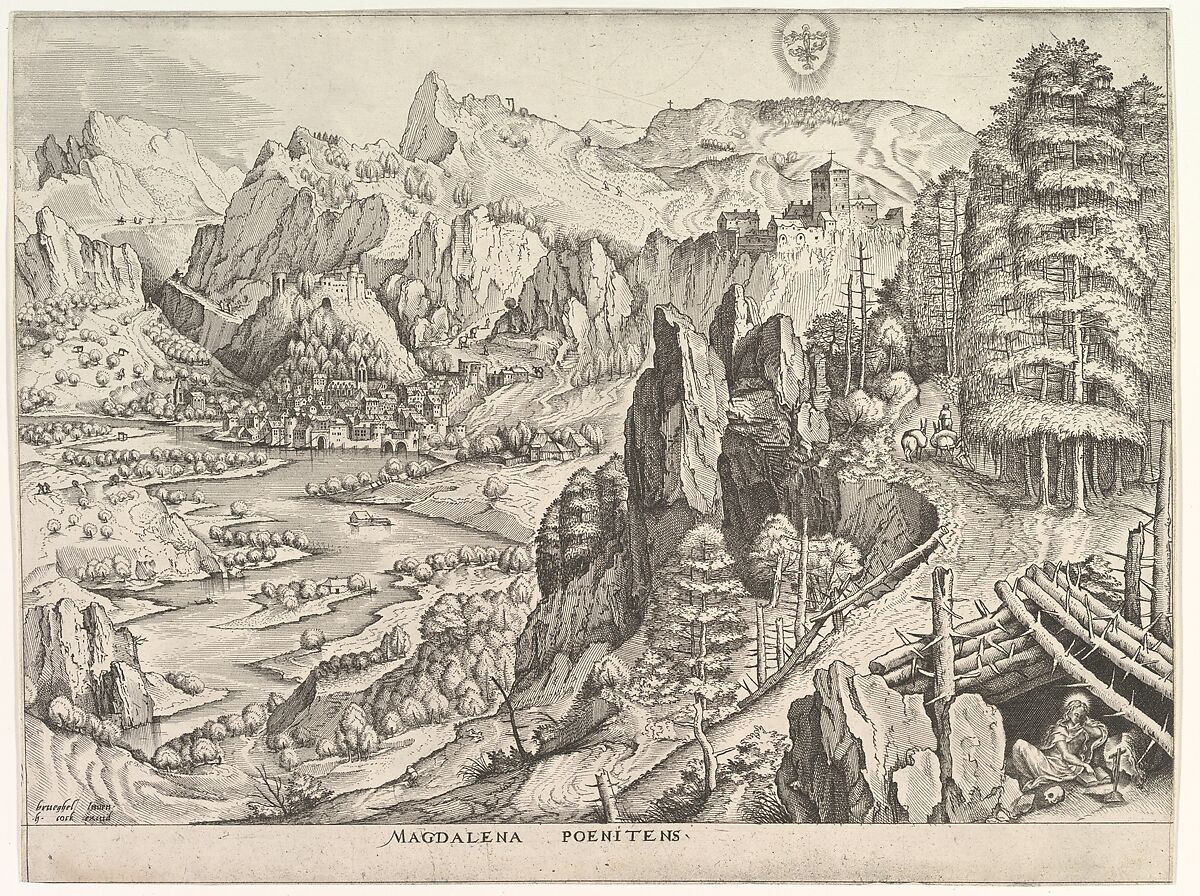
Doetecum after Brueghel The Penitent Magdalene Etching about 12 X 16″ 1555
Stanley gave a wonderful talk at the New York Studio School about the picture above.
Stanley, in many ways, is a sculptor, a constructor, a painter who makes an unforgettable object of his painting. His carved works, made of clay, stone, plaster…of figurines, cars, are wonderful. I enjoy seeing his sculpture in proximity to his painting. His early painting is touched with humor and a Pop sensibility merged with his Constructivist inclination.

Stanley Lewis, See Clear Across the USA oil on masonite 1984
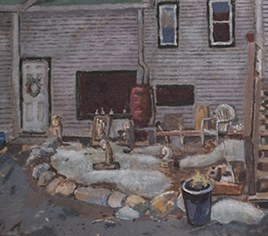
This (below) is a painting I made of Stanley’s house in Leeds, MA back in 2019, begun on location. In the foreground left are several of his sculptures. His studio is richly populated with marvelous figures that he has carved. Nowadays, he is often whittling them out of wood (when visiting his grandchildren).
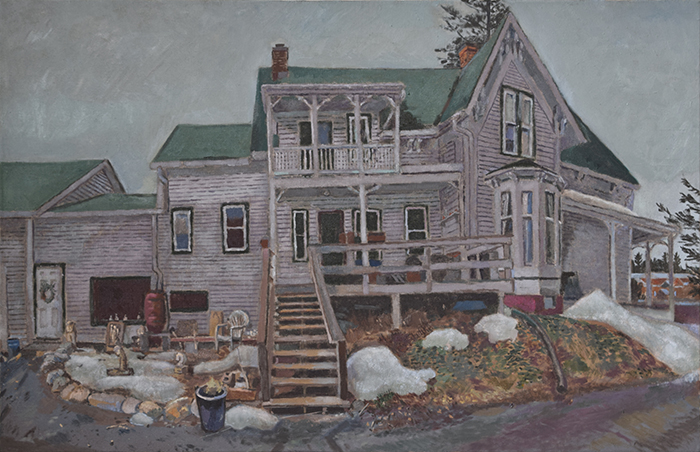
Stan’s House oil on linen 26 X 40″ 2019
Coming back to Rackstraw, there are several good videos to see including this one about a retrospective that was at Swarthmore back in 2020.
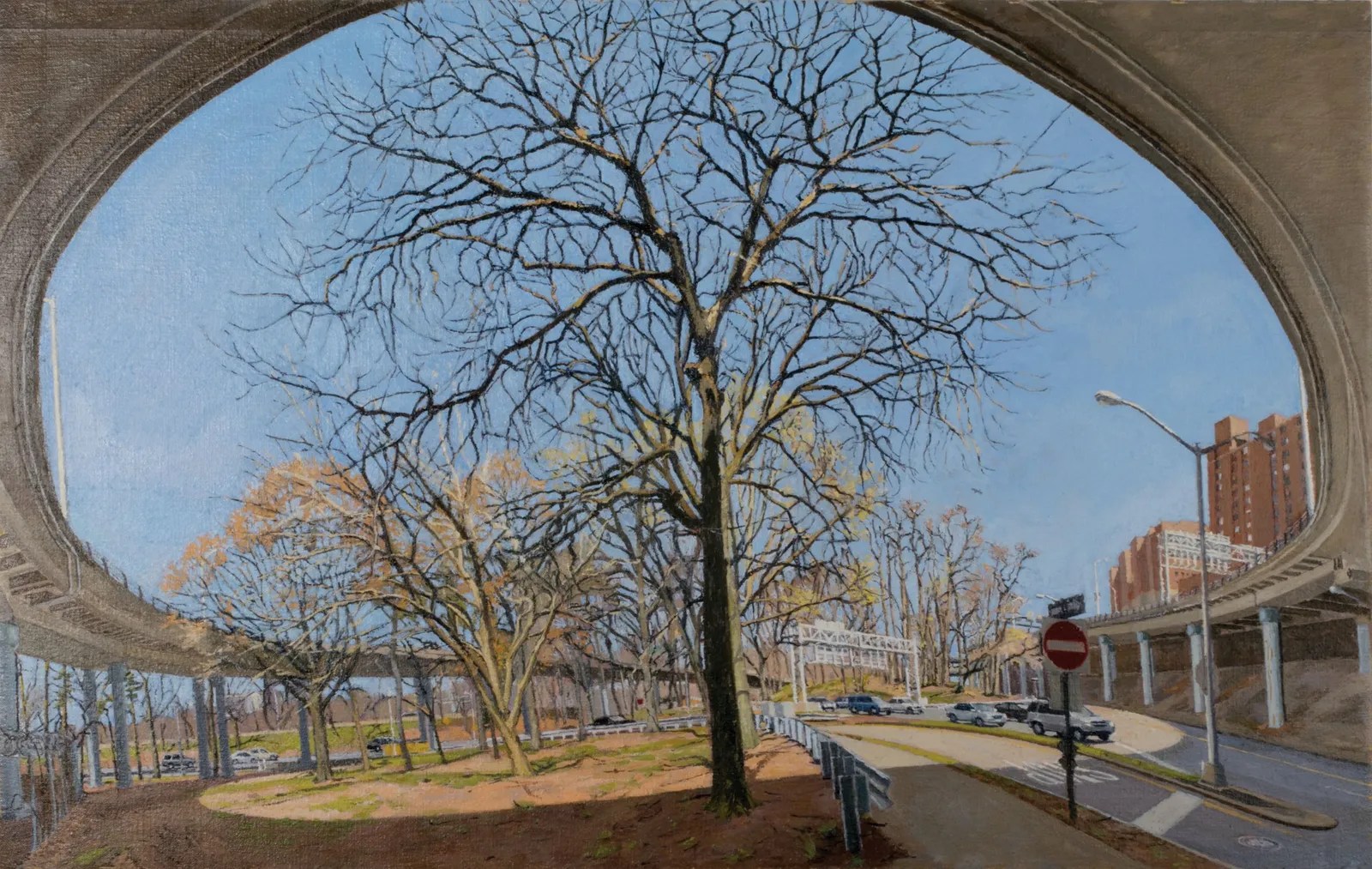
Rackstraw Downes Under the Ramp from the George Washington Bridge to Route 9A North 2009.
I wonder if he is interested in the work of Edward Tufte. His comprehensive and exacting mind and his creative presentation seem somewhat akin.
Rackstraw is, in a sense, presenting data in an interesting way. I remember him talking about being direct as opposed to artful. Like Magritte, he paints in a matter of fact way, and yet so sumptuously on close viewing.
Here is another wonderful video, this time of Rackstraw talking about his work sounding very much as he did back in 1980. What strikes me here is his sense of reverence for what just is, and his discovery of fulness in what might appear empty.
Stanley and Rackstraw are two fascinating and inspiring artists who are of the post-WW2 generation, the Vietnam era. They bring a quality to their work that both transcends and reflects their time.
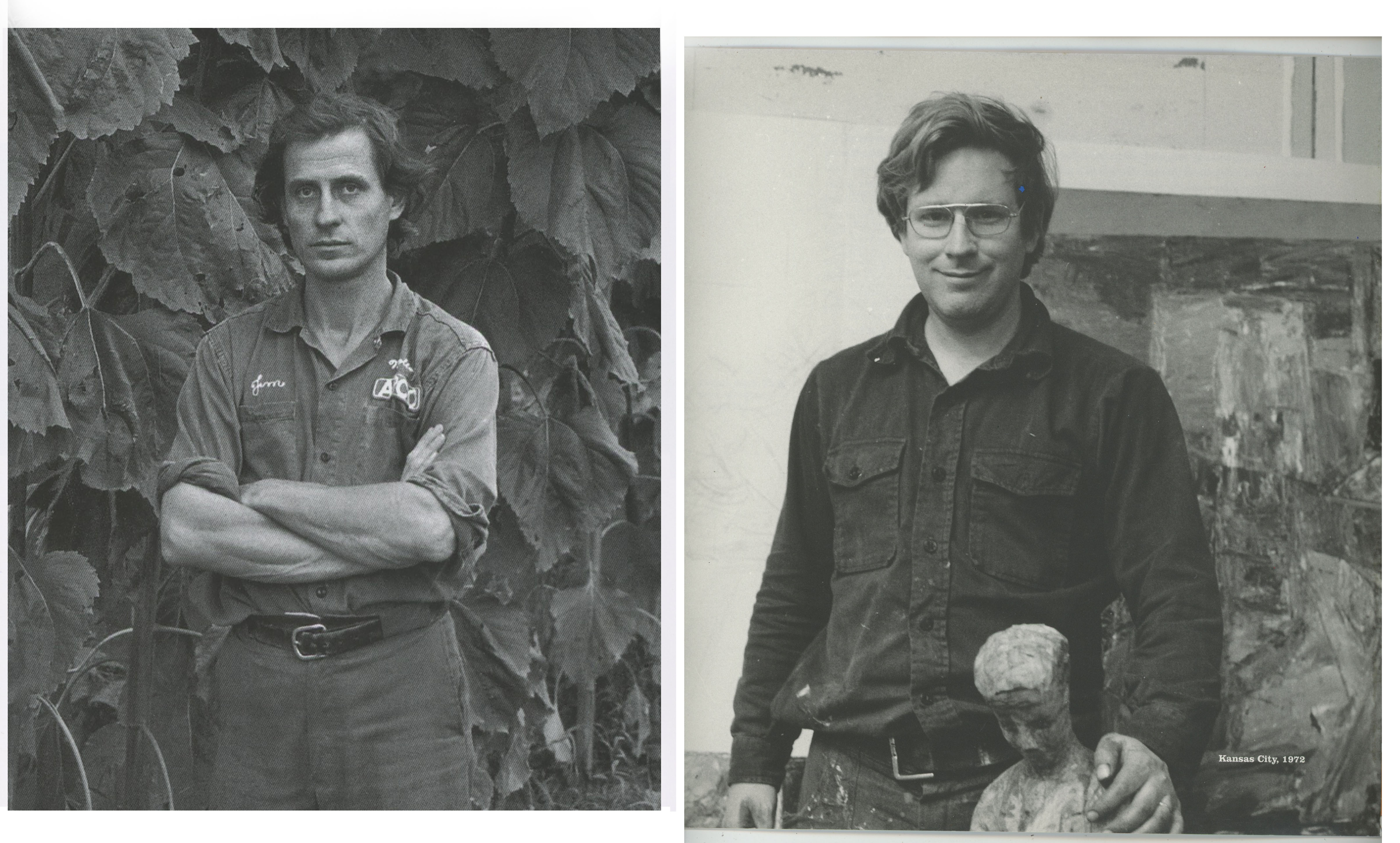
Photo left from Rackstraw Downes by Schwartz, Storr & Downes and right from Stanley Lewis-A Retrospective, American University Museum
Their presence does show up in my work and I am grateful to them, being a half generation or so younger, further on down the road.
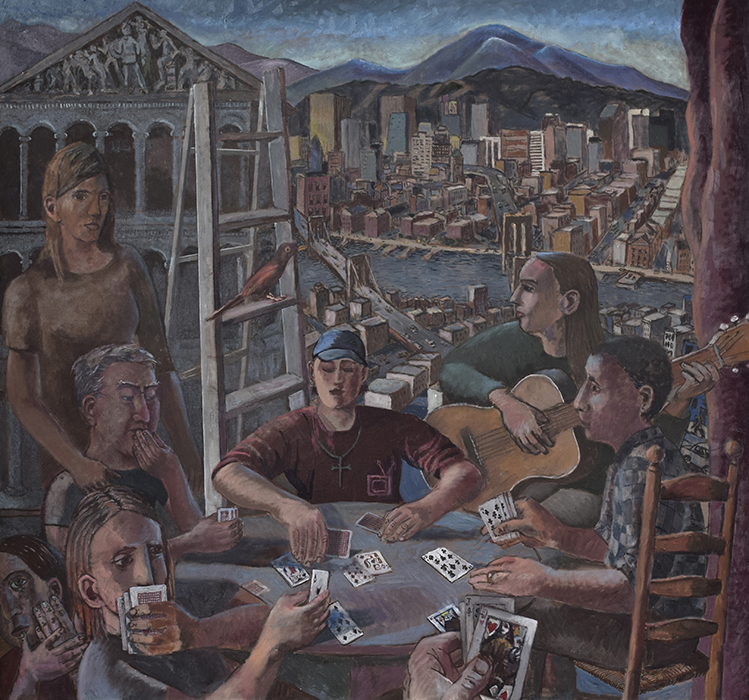
The Day the World Gets Round oil on linen 54 X 50″ 2020
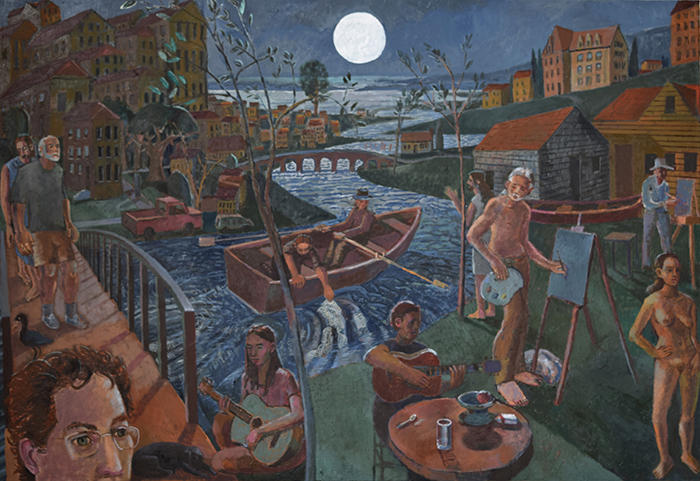
Time Ago and What is Next oil on linen 40 X 58″ 2017
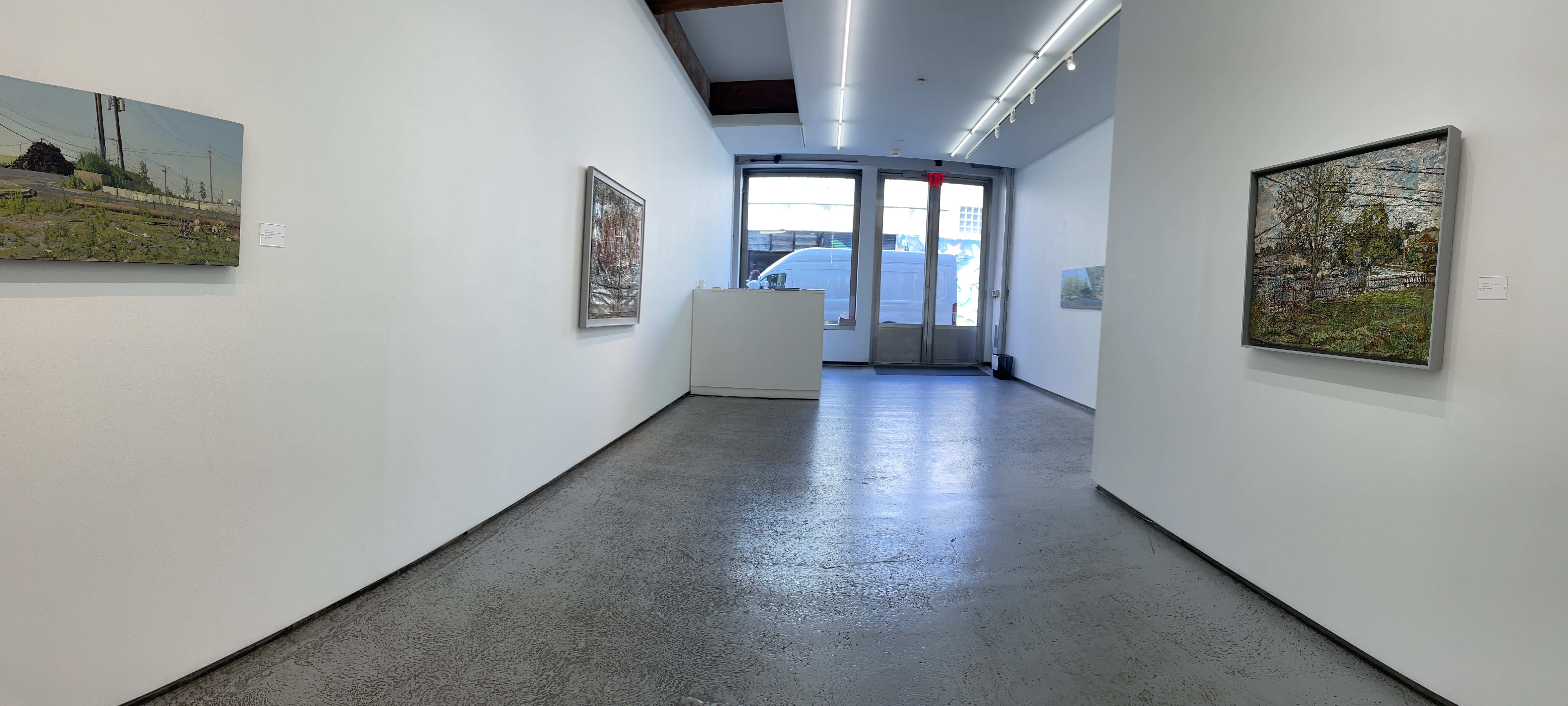
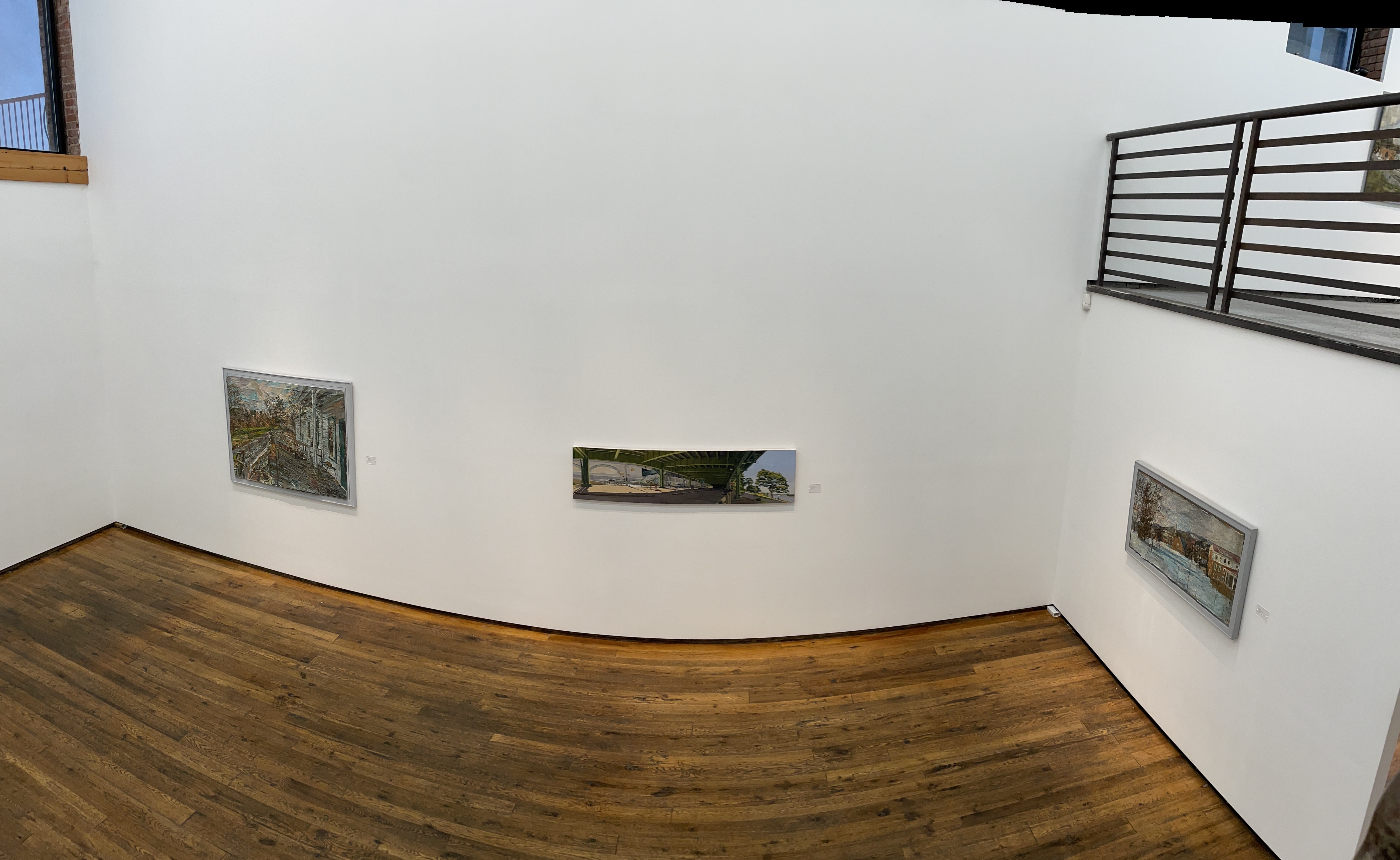
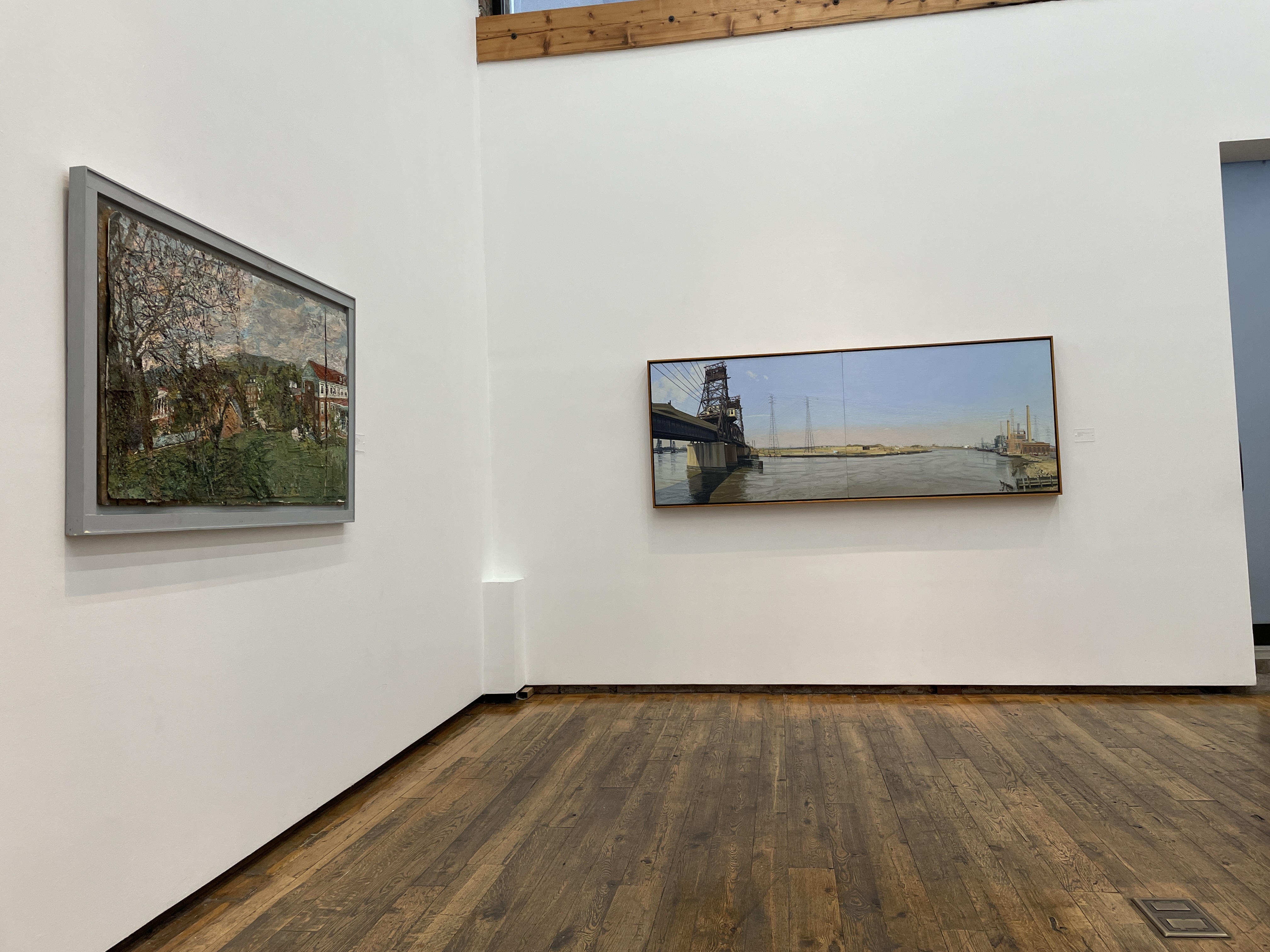
Interiors of On-Site: Major Paintings by Rackstraw Downes and Stanley Lewis at Betty Cunningham Gallery
 grier torrence
Dear Greer
thank you so much for sharing your blog. It is very rich and full of information. I can only imagine how much time you put into this.
I saw the show at Betty Cunniingham and now it’s wonderful to hear a personal account of Downes and Lewis from an artist who has studied with them. The anecdotes you share are easy to relate to and I see that these two artists were important to your development as a painter.
A lot of things stand out in your blog but i just want to mention a few things. First I always like to see an Erle Loran Diagram! When i first started painting at the Art Students League i spent a lot of time with his book and the arrows have stayed with me but i never see exactly what he sees in the Cezanne paintings
Very interesting that you mention Edward R.Tufte. I’ve been talking about his book Visual Explanations a lot lately with a friend. If you have the book look at the Mark Tansey painting called *Myth of Depth. *It’s a funny and fitting pictorial description of the period when depth in painting was being questioned/ challenged. The painting features Pollack walking on water! Just out of curiosity, which Tufte book did the “color wheel spiral” come from? He’s written three.
I hope your summer is going well.
with warm regards, Diane
LikeLike